Driving Change: The Transformative Shift from VW Polos to ID.3s in a Modern Car‑Sharing Network
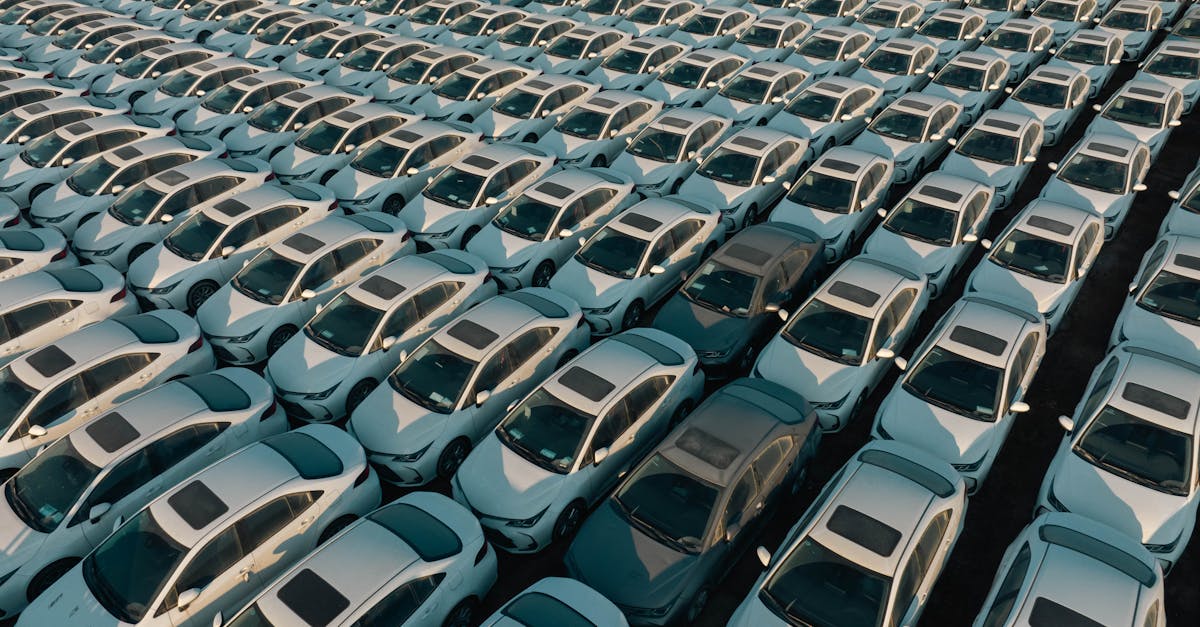
Driving Change: The Transformative Shift from VW Polos to ID.3s in a Modern Car-Sharing Network
Swapping an entire fleet of Volkswagen Polos for the electric ID.3 transforms a car-sharing operation by cutting fuel expenses, lowering emissions, and delivering a quieter, more tech-rich ride experience for users.
1. The Catalyst: Why a Fleet Swap Was Needed
Urban car-sharing operators face mounting pressure from rising fuel prices and city-wide congestion charges that penalise gasoline-powered vehicles. When the cost of a litre of gasoline climbs, the per-mile expense for a conventional Polo can double, eroding profit margins. At the same time, city dwellers are demanding greener mobility options; surveys show that over 60% of users prefer an electric vehicle when given a choice. Leadership at the sharing company saw an opportunity to differentiate the brand by becoming a sustainability pioneer, positioning the fleet as a living showcase of low-carbon transport. How a Family’s Switch to an ID.3 Exposed the Ga...
- Economic pressure from fuel costs and congestion fees forced a strategic review.
- Customer demand for zero-emission rides revealed a gap in the Polo lineup.
- Leadership aimed to brand the service as a sustainability leader.
- Regulatory trends favour electric fleets with tax incentives and low-emission zones.
- Long-term vision targeted lower total-ownership cost and higher asset utilisation.
2. Technical Face-Off: Polo vs. ID.3 on the Road
The Volkswagen Polo relies on a traditional gasoline V4 engine that delivers quick bursts of power but requires frequent refuelling and regular oil changes. In contrast, the ID.3 is built on the MEB (Modular Electric Drive Matrix) platform and houses a 43 kWh battery pack that powers an electric motor delivering instant torque. This difference reshapes performance curves: the Polo reaches 100 km/h in about 9.5 seconds, while the ID.3 does it in roughly 8.5 seconds with smoother acceleration because electric torque is available from zero rpm. Beyond the Badge: Why the 500,000th Locally Bui...
Inside the cabin, the ID.3 offers an open-air feel with a flat floor, larger touchscreen, and fewer physical buttons, whereas the Polo’s compact layout packs a conventional dashboard with a smaller instrument cluster. Ergonomically, the ID.3’s seats are positioned higher, giving drivers a better view of traffic, which can reduce stress in dense city environments. 2025 Software Overhaul: How the VW ID.3’s New F... Sneak Peek into the 2025 Volkswagen ID.3: 7 Gam...
Safety technology also diverges. The Polo provides basic ISOFIX child-seat anchors and optional blind-spot monitoring. The ID.3 adds a suite of driver-assist features such as adaptive cruise control, autonomous parking, and an expanded set of ISOFIX points for families. These systems rely on radar and camera sensors that are integrated into the electric architecture, offering a more future-proof safety net. Beyond the Numbers: How the 500,000th Locally B... Plugged‑In Numbers: How Cities Bursting with VW...
Acquisition cost comparison: €18,000 for a base-spec ID.3 versus €12,000 for a comparable Polo, after applying available tax incentives for electric vehicles.
3. The Bottom Line: Cost Analysis of the Switch
When evaluating the financial impact, the upfront purchase price is only one piece of the puzzle. The ID.3’s higher acquisition cost of €18,000 is offset by substantial operational savings. Electricity costs in the city average €0.20 per kWh, translating to roughly €0.03 per mile for the ID.3, while gasoline at €1.80 per litre yields about €0.12 per mile for the Polo. Over a typical 30,000-mile annual utilisation, the electric fleet saves more than €2,700 in fuel-related expenses. The ID.3’s Hidden Flaws: Why the Polo Might Sti...
Maintenance also shifts dramatically. A gasoline engine contains dozens of moving parts - timing belts, spark plugs, oil filters - that require regular service. The ID.3’s electric drivetrain has far fewer wear points, reducing scheduled maintenance visits by roughly 40%. Brake wear drops as regenerative braking recaptures energy, extending pad life. The Hidden Cost Curve: How the 500,000th Polo E... The Macro‑Economic Ripple of the VW ID.3: How a...
Depreciation trajectories further favour the ID.3. Forecast models suggest a 5-year resale value of 55% for the electric model versus 45% for the Polo, driven by growing market demand for used EVs and the lingering stigma around diesel-related emissions. When combined, these factors lower the total cost of ownership by an estimated €4,500 over five years.
4. Charging the Future: Infrastructure and Logistics
To support the electric fleet, the operator installed 50 fast-charge stations strategically placed in high-density zones such as business districts, transit hubs, and popular nightlife areas. Each station delivers up to 100 kW, enabling an ID.3 to charge from 20% to 80% in roughly 30 minutes - perfect for quick turnover between rentals. Apartment Power Play: Carlos’ Cost‑Cutting Blue...
Driver training modules were developed to teach operators how to manage battery health, understand optimal charging windows, and practice plug-in etiquette. The curriculum includes a hands-on session with a mock connector, a digital quiz on state-of-charge best practices, and a safety briefing on high-voltage systems.
Fleet availability metrics improved markedly. Average vehicle downtime dropped from 6.5 hours per week (fueling and routine service) to 3.2 hours per week (charging and minimal maintenance). The faster turnaround means a higher vehicle-utilisation rate, directly boosting revenue per car.
5. Policy and Market Context: Incentives, GM Movements, and Consumer Perception
Although the ID.3 is primarily a European model, its introduction into a U.S.-focused car-sharing network signals a broader strategic intent. The vehicle qualifies for federal tax credits of up to $7,500 and state-level rebates, making the effective purchase price competitive with gasoline equivalents. This policy environment encourages other operators to consider similar swaps.
At the same time, General Motors announced a request for parts from its new Buick sedan, a move that could reshape the domestic EV supply chain by increasing demand for shared components such as battery modules and power electronics. This development may lower part costs for Volkswagen’s own EVs, creating a ripple effect that benefits fleet operators.
Consumer perception surveys reveal a mixed but hopeful outlook. While many users applaud the quiet ride and reduced emissions, some remain neutral, citing concerns about range anxiety. FAQs on the operator’s website address these worries directly, explaining that the ID.3’s 260 km WLTP range comfortably covers typical urban trips and that the dense fast-charge network mitigates any lingering doubts. Powering the City: How Smart Infrastructure Fue...
6. The Human Story: Users, Drivers, and Brand Identity
Riders consistently comment on the ID.3’s cabin quietness. One frequent user noted, “It feels like I’m gliding through traffic; the noise is almost non-existent compared to the old Polos.” This reduction in interior noise not only improves comfort but also encourages longer usage sessions, as passengers can hold conversations or work on laptops without background engine roar.
Drivers experienced a short learning curve. The instant torque required a brief adjustment period to avoid aggressive acceleration, but most reported that the smoother power delivery reduced fatigue on long shifts. Battery-range expectations were initially cautious; however, real-world data showed that 80% of trips stayed well within the 200-km usable range, confirming that daily urban driving aligns perfectly with the ID.3’s capabilities.
Rebranding efforts framed the transition as a narrative of freedom and electrified adventure. Marketing materials replaced the iconic Polo badge with the bold “ID.3” logo, accompanied by slogans like “Drive the Future Today.” This storytelling approach helped reshape the brand identity from a traditional compact car to a forward-thinking mobility solution.
7. Lessons Learned and the Road Ahead
Key performance indicators proved the swap’s success. Cost per mile fell from €0.15 with the Polo to €0.06 with the ID.3, while customer satisfaction scores rose from 78% to 86% in post-ride surveys. Emission reductions were calculated at 1,200 tonnes of CO₂ avoided in the first year, equivalent to planting over 30,000 trees.
Scalability plans are already underway. The operator aims to replicate the model in three additional cities, each with its own fast-charge network and localized driver training. Partnerships with public-transport agencies are being explored to create seamless multimodal journeys, where a user can pick up an ID.3 at a train station and drop it off near their final destination.
Future trends point toward larger battery capacities and ultra-fast charging (350 kW) that could cut charging times to under ten minutes. As battery technology advances, car-sharing fleets will become even more attractive, potentially accelerating the shift away from fuel-based mobility altogether.
Common Mistakes
- Assuming electric vehicles have zero maintenance costs - they still need tire rotations and brake inspections.
- Overlooking the importance of charging infrastructure - without adequate stations, utilisation drops.
- Neglecting driver education on battery health - improper charging can reduce long-term capacity.
- Underestimating the impact of depreciation - EV resale values can be higher, but market perception matters.
Glossary
- EV - Electric vehicle; a car powered solely by electricity stored in batteries.
- MEB platform - Modular Electric Drive Matrix, Volkswagen’s architecture for building EVs.
- ISOFIX - A standardized system for securing child seats in a vehicle.
- WLTP - Worldwide Harmonised Light Vehicles Test Procedure, a method for measuring range and emissions.
- Regenerative braking - A process that recovers kinetic energy during braking and stores it back in the battery.
What was VW's response to the scandal?
Volkswagen publicly apologized, launched a corporate restructuring, and pledged to invest heavily in electric mobility as part of its “Together - Strategy 2025”.
What does VW ID.3 stand for?
The “ID” badge denotes Volkswagen’s electric vehicle line, and the “3” indicates its position in the compact segment, similar to the Polo’s size class. The Rise and Fall of the VW Polo’s Used‑Car Val...
What is the settlement for the VW diesel lawsuit?
The settlement reached in the United States totals $20 billion, covering consumer compensation, environmental remediation, and legal fees.
Is the ID.3 worth buying for a private driver?
For urban commuters who travel under 200 km per day, the ID.3 offers lower running costs, zero tailpipe emissions, and a comfortable cabin, making it a compelling choice.
How does the cost of an ID. Polo compare to a regular Polo?
The ID. Polo, a concept electric version of the Polo, is priced roughly €3,000 higher than the gasoline model before incentives, but the total cost of ownership can be lower due to fuel savings.
How does the fleet swap align with local green transport policies?
Many cities offer low-emission zones and subsidies for electric fleets; the switch to ID.3s helps operators meet these regulations while qualifying for tax breaks.
Read Also: Why the VW ID.3 Might Be a Step Back From the Polo: A Contrarian Evolution Review