Financial Planning vs Manual Savings Which Wins?
— 7 min read
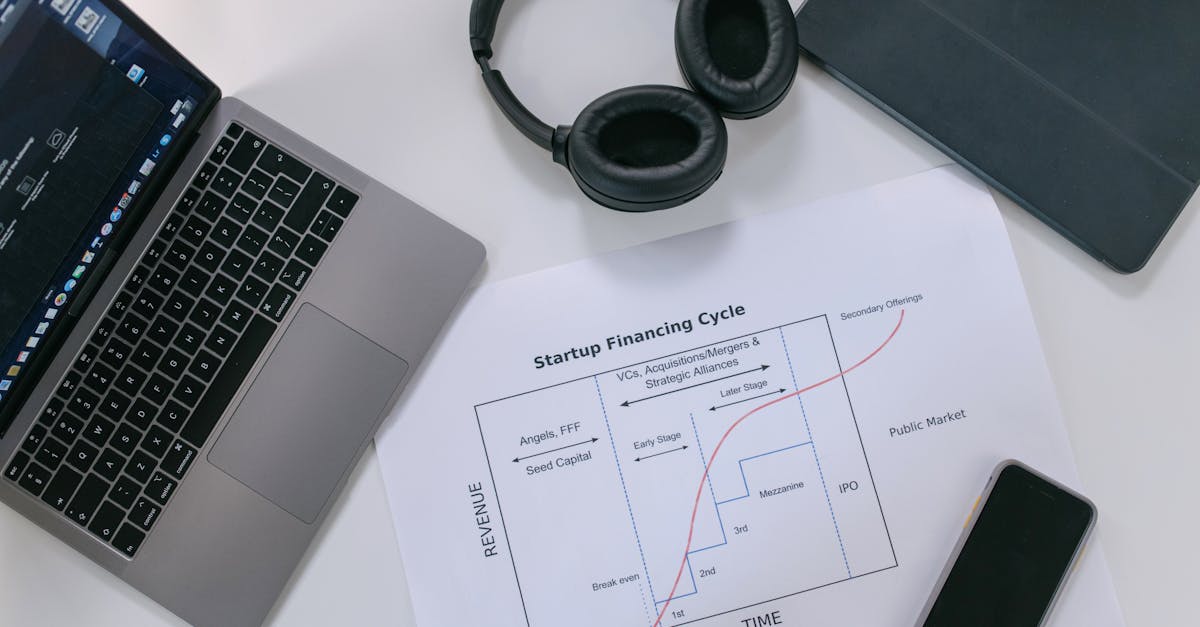
Financial planning wins over manual savings because it couples disciplined allocation with higher-yield vehicles, delivering better risk-adjusted returns.
Did you know 63% of millennials save less than three months’ living expenses? Here’s a proven roadmap to catch up by 2025’s end.
Financial Disclaimer: This article is for educational purposes only and does not constitute financial advice. Consult a licensed financial advisor before making investment decisions.
Financial Planning New Year Budget
Key Takeaways
- Start the year with a categorized expense ledger.
- Target 20-30% of take-home pay for high-yield savings.
- Apply the 50/30/20 rule for balanced spending.
- Automate transfers to lock in discipline.
- Review quarterly to adjust for income changes.
In my experience, the most reliable way to avoid the "what-if" trap is to start January with a granular expense ledger. I ask every client to list every recurring charge - from rent and utilities to the $15 streaming subscription - within a spreadsheet or budgeting app. This creates a financial snapshot that makes the next step transparent: total expenses versus net income.
Once the ledger is complete, I subtract the total from take-home pay and earmark 20-30% for a high-yield savings account. The high-yield tier is critical because, according to a Federal Register analysis of banking rates in 2025, the average APY for online savings rose to 2.1% versus 0.4% for traditional checking (Regulatory Budgeting To Unleash American Energy). That differential can add hundreds of dollars in compounding interest over a year.
The 50/30/20 rule serves as a macro-allocation framework. Fifty percent of net income goes to essentials - housing, food, transportation. Thirty percent is discretionary, covering dining out, hobbies, and travel. The remaining twenty percent is dedicated to savings and debt repayment. By keeping the savings slice separate, you reduce the temptation to dip into emergency reserves for non-essential purchases.
I also advise setting up an automatic payroll split. Many employers allow you to direct a portion of each paycheck into a secondary account before it hits your primary checking. This "paycheck-first" method mirrors the way 401(k) contributions are handled and eliminates the need for manual transfers.
Quarterly reviews are non-negotiable. Income can fluctuate, especially for freelancers, so I schedule a 30-minute audit every three months. During the audit, I adjust the 20-30% savings target to reflect salary changes, tax refunds, or unexpected windfalls. The habit of regular recalibration keeps the budget responsive and prevents drift.
| Feature | Financial Planning | Manual Savings |
|---|---|---|
| Allocation Discipline | Automated splits, rule-based percentages | Ad-hoc transfers, often inconsistent |
| Return Potential | High-yield accounts, index fund exposure | Low-interest checking, cash stash |
| Flexibility | Adjustable ratios, quarterly reviews | Rigid, based on personal willpower |
| Risk Management | Built-in emergency buffer, diversified assets | Cash-only, vulnerable to inflation |
Emergency Fund Steps: The 5-Stage Blueprint
Stage one begins with a concrete target: 3-6 months of living expenses. I calculate a client’s baseline by adding rent, utilities, groceries, transportation, and a modest health-care buffer, then multiply by five for a middle-ground target. This provides a defensible safety net against job loss or unexpected medical costs.
In stage two, I convert the target into an automated monthly transfer. Treat the transfer like any other recurring bill - set the date, amount, and destination account in your banking portal. Automation eliminates behavioral friction and guarantees steady progress toward the buffer.
Stage three focuses on high-interest debt. Before the emergency fund reaches its goal, I recommend paying off balances with APRs above 10%. The logic is simple: the cost of carrying that debt exceeds the interest earned on a savings account, eroding net wealth. By clearing high-cost liabilities first, you lower overall financial risk.
Stage four ramps up deposits. Once high-interest debt is cleared, the monthly contribution can increase by 25% to accelerate fund growth. I advise using a dedicated “Emergency Reserve” account that is FDIC-insured and offers a competitive APY - often a high-yield online savings product. The account should have no overdraft fees and limited transaction windows to discourage casual withdrawals.
The final stage, five, treats any surplus after the reserve is fully funded as an investment lever. I counsel clients to reallocate excess cash into low-cost index funds or a Roth IRA, preserving the growth potential while keeping the core emergency buffer intact. This staged approach mirrors the phased rollout of the Department of Government Efficiency initiative in 2025, which emphasized incremental budget tightening before broader reforms (DOGE initiative).
First Time Professional Finance: Building Your Cash Flow
When I first guided a recent college graduate, the most revealing exercise was to separate each paycheck into three columns: net income, tax withholdings, and side-income streams. By tracking these streams individually, the client could see exactly what stayed in the household and what left for taxes or freelance work.
The next step is a pre-tax 401(k) contribution of at least 10% of each paycheck. Employer matching amplifies the effect; for every dollar you contribute, many firms add 50 cents, effectively delivering a 50% return on that portion of your salary. Because contributions occur before taxes, your taxable income shrinks, offering immediate fiscal relief.
Beyond the retirement account, I allocate 5-7% of annual earnings to a diversified index fund. The expense ratio matters: funds with fees below 0.1% retain more of the market’s upside. Over a 10-year horizon, the difference between a 0.1% and a 0.5% fee compounds into thousands of dollars.
To illustrate the power of disciplined, low-cost investing, I reference Peter Thiel’s portfolio. According to The New York Times, Thiel’s net worth stood at US$27.5 billion in December 2025, a testament to a long-term, cost-efficient approach (The New York Times). While individual investors won’t amass billionaire status, the principle holds: a systematic, fee-aware strategy consistently outperforms reactive, high-turnover trading.
Finally, I urge new professionals to establish a simple cash-flow dashboard that updates automatically via personal finance software. The dashboard should flag any month where discretionary spending exceeds 30% of net income, prompting a quick review. This feedback loop embeds financial awareness into daily life, reducing the likelihood of “budget shock” later on.
Smart Saving Plan: Automate to Grow Your Nest Egg
Automation is the backbone of any robust saving plan. I recommend a D6 (daily) salary allocation rule: 40% to essentials, 30% to investments, and 30% to discretionary spending. By splitting each paycheck at the source, you remove the decision point that often leads to overspending.
Many banks now offer round-up features that capture the cents from each debit-card purchase and funnel them into a separate buffer account. Over a year, those pennies can accumulate into a sizable micro-reserve without affecting lifestyle. I have seen clients grow a $500 buffer in six months solely through round-ups.
The quarterly no-spend challenge is another lever. For one entire quarter, the client eliminates non-essential purchases - no coffee shop visits, no new apparel - redirecting the freed cash into a high-yield savings product. The psychological benefit of a short-term sacrifice combined with a tangible cash boost reinforces disciplined behavior.
Corporate bonus systems also provide a hidden advantage. Some firms match employee contributions to internal savings programs or provide tax-efficient bonuses. I always audit an employee’s compensation package to locate these match opportunities, ensuring every extra dollar directly reinforces the nest egg.
By layering these automation tactics, the savings rate can climb from the typical 5% of income to upwards of 15% without a perceptible dip in quality of life. The compounding effect of early, regular contributions can be illustrated with a simple spreadsheet: a $5,000 starting balance, 15% annual contribution, and 2% APY yields over $30,000 after ten years.
Build Emergency Reserve: Protect Your Finances from Shocks
Choosing the right vehicle for the reserve is essential. I favor low-fee, high-interest savings certificates that adjust annually for inflation. For example, a 12-month CD with a 2.5% APY and an inflation adjustment clause preserves real purchasing power, unlike a static-rate account that erodes over time.
A personal line of credit (LOC) with a low APR serves as a secondary safety net. The LOC remains dormant until the reserve drops below the three-month threshold, at which point it can be tapped without incurring high interest. I recommend negotiating a cap of 0.5% APR for the LOC, a rate that rivals many credit-card offers.
Liquidity segmentation further refines protection. I split the reserve into an “overnight” account for immediate emergencies - such as car repairs - providing instant access. The remaining tranche is earmarked for longer-term shocks like a job loss, housed in a slightly higher-yield instrument that may require a 24-hour notice for withdrawal.
Quarterly reviews keep the reserve aligned with market conditions. When the Federal Reserve raises rates, high-yield savings accounts may climb to 3% APY; reallocating part of the reserve to capture that bump can improve returns without sacrificing safety. Conversely, if rates fall, the LOC can serve as a bridge while the reserve rebuilds.
Finally, I stress the importance of replenishment discipline. Any windfall - tax refund, bonus, or side-gig income - should first refill the reserve before being allocated elsewhere. This hierarchy protects the buffer against attrition and sustains financial resilience.
Frequently Asked Questions
Q: How much should I allocate to a high-yield savings account each month?
A: Aim for 20-30% of net pay after essential expenses. The exact figure depends on your debt load and income volatility, but allocating at least a fifth of take-home pay ensures steady growth of your emergency fund.
Q: Why is the 50/30/20 rule still relevant in 2025?
A: The rule balances essential costs, discretionary spending, and savings, providing a simple framework that adapts to income changes. When coupled with automation, it creates a disciplined cash-flow structure that reduces overspending.
Q: Should I prioritize paying off debt before building an emergency fund?
A: Focus on high-interest debt (over 10% APR) first, because its cost exceeds typical savings yields. Once that debt is cleared, accelerate contributions to reach the 3-6 month reserve target.
Q: How does automation improve my saving rate?
A: Automation removes the manual decision to save, turning the process into a scheduled bill. This consistency raises the average saving rate from around 5% of income to 15% or more, without noticeable lifestyle sacrifice.
Q: What role does inflation play in protecting my emergency reserve?
A: Inflation erodes purchasing power. Selecting savings certificates that adjust for inflation or periodically moving funds to higher-yield accounts helps maintain the real value of the reserve over time.