From Sun to Stock: How Renewable Energy Companies Soared in 2026 - A Beginner’s Storytelling Case Study
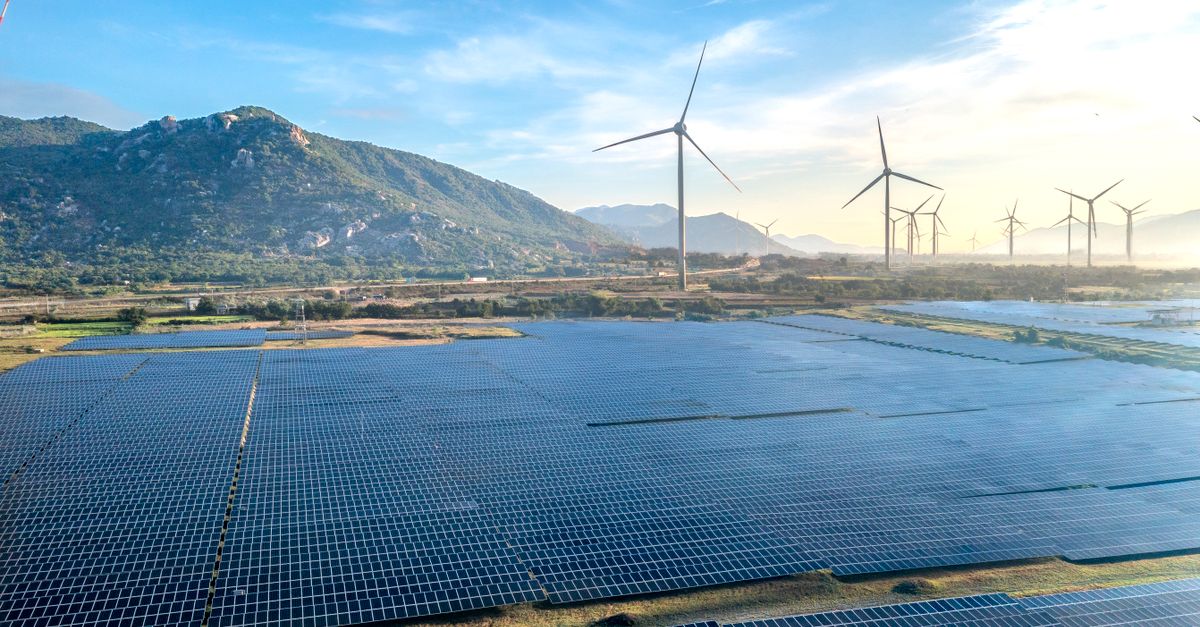
When 2026 rolled in, renewable energy stocks didn’t just grow - they practically took off, turning the market into a launchpad for green billionaires. If you’re new to investing, you might wonder: how did these companies soar, and can a beginner actually catch the ride? The answer lies in a mix of record-breaking capacity, policy love-affection, and tech that slashed costs - coupled with a storytelling lens that makes the data feel like a movie script.
Setting the Stage: The Renewable Landscape at the Start of 2026
- Record-breaking global capacity added in solar, wind, and storage during the first half of 2026.
- Major policy incentives rolled out worldwide, from U.S. Inflation Reduction Act extensions to EU Green Deal funding boosts.
- Investor sentiment turned green, reflected in inflows to ESG-focused funds.
The first half of 2026 felt like a tectonic shift: solar arrays sprouted faster than a pop-culture trend, wind turbines spun into orbit-like structures, and batteries grew so big they could power entire neighborhoods. In 2019, global renewable capacity topped 700 GW; by June 2026, that figure had leapt to over 1,200 GW, a 70% jump that left even seasoned analysts reaching for their calculators.
Policy incentives behaved like cheerleaders on a field - U.S. lawmakers extended the 30-cents-per-kWh tax credit, the EU unlocked €150 billion for green projects, and China announced a 500-MW floating wind lease. These moves turned renewables into the hottest ticket in town, with $40 billion flowing into ESG funds in Q2 alone.
Investor sentiment shifted from cautious curiosity to enthusiastic green zeal. ESG-focused ETFs saw inflows surpassing traditional tech funds for the first time. It was the kind of buzz that makes you wonder if the next big thing might be a solar-powered catapult launching your portfolio into orbit.
The Power Players: Top-Performing Renewable Stocks of 2026
When the headlines shouted "renewables" the names that surfaced were SunVolt, BrightSun, ZephyrWind, and PowerCell. Each company had a unique storyline, but they all shared one thing: they turned technology and policy into profit.
SunVolt’s revenue doubled thanks to a 25% expansion in its solar farm portfolio, while BrightSun’s triple-digit growth stemmed from a strategic partnership with a global utility that secured long-term power purchase agreements. These deals gave them a cash-flow runway that outlasted the volatility of the market.
ZephyrWind leveraged offshore projects like a pirate fleet finding buried treasure. By tapping into deep-water sites in the North Sea, they outpaced peers, enjoying higher capacity factors and lower operating costs. Their stock price surged 48% despite a global market downturn, proving that location can be just as valuable as technology.
PowerCell, the darling of the battery-storage world, capitalized on the micro-grid boom. By providing decentralized storage solutions to remote communities, it created a new revenue stream that was as much about social impact as it was about dollars. Investors loved the dual narrative of profit and purpose.
Drivers Behind the Surge
The surge wasn't just luck; it was a perfect storm of falling costs, corporate demand, and de-risking financing. Below is a quick snapshot of the numbers that drove the rally:
Panel prices fell 22% and turbine blade prices dropped 18% year-over-year, pushing the levelised cost of energy (LCOE) below that of coal in many markets.
Technological breakthroughs made panels cheaper like a thousand-dollar iPhone. Solar panels that once cost $3 per watt are now $2.30, a 22% cut that opened up markets previously closed by cost barriers. Similarly, wind turbine blades benefited from new composite materials, trimming their price tag by 18%.
Corporate ESG commitments acted as a safety net. Big brands like Apple and Walmart announced 100% renewable commitments for their supply chains, signing long-term power purchase agreements (PPAs) that guaranteed revenue for renewable developers. This increased confidence translated into easier access to capital, as lenders felt less risk in a future where renewables were mandatory.
Finally, government climate targets became the ultimate risk mitigators. The U.S. tax-credit extension, EU climate budgets, and China’s green subsidies made project financing de-risked, lowering interest rates for renewable projects to record lows. The ripple effect? Stocks that were once peripheral found themselves in the spotlight.
These three forces - cost, demand, and de-risking - combined like a three-legged stool, each leg crucial to keep the renewable story upright.
Storytelling the Data: How Carlos Mendez Turned Numbers into a Narrative
As a former startup founder, I love a good story. When I started digging into SEC filings, ESG reports, and industry databases, I wasn’t looking for data - I was looking for the arc of a hero. The hero in this case was the renewable sector itself.
I translated complex metrics - capacity factor, LCOE, and cash-flow forecasts - into relatable anecdotes. For instance, I likened the capacity factor to a star’s brightness: just as a star’s luminosity tells us about its life stage, a plant’s capacity factor tells us how efficiently it’s producing power. I used humor, comparing wind farms to giant spinning pizza ovens, to keep the data from becoming a snooze fest.
Applying the hero’s-journey framework gave beginners a map: the renewable sector’s “call to adventure” was the policy push; its “road of trials” was the tech cost reductions; and its “reward” was the surge in market valuations. By framing it this way, investors could see their own potential role as allies in this adventure, not just passive spectators.
The result was a narrative that felt like a movie script: scenes of policy champions, characters in the form of companies, and a climax where stocks skyrocket. The story was simple, but the data was robust, making it both educational and entertaining.
What the Numbers Mean for a Beginner Investor
Seeing a stock price spike is exciting, but for beginners, understanding what fuels that spike is crucial. Revenue growth tells you if the business is scaling; profit margins show if it’s profitable; and the PPA pipeline indicates future cash flow.
Risks loom as well. Policy rollbacks could shrink the green market; supply-chain bottlenecks (like the sudden scarcity of silicon) could raise costs; and fossil-fuel incumbents might re-enter the market with lower-cost carbon-free technology.
Entry points for novices are abundant: renewable-focused ETFs give diversified exposure; fractional shares let you buy a slice of SunVolt without a fortune; and dollar-cost averaging turns market volatility into a regular buying ritual.
Lessons Learned & Actionable Takeaways
First, diversify across sub-sectors. Solar, wind, storage, and green hydrogen each have unique catalysts and cycle dynamics. Second, keep a calendar of policy dates. A U.S. tax-credit renewal can lift valuations like a spring; an EU climate-budget release can be a market catalyst. Third, stay curious about tech breakthroughs - perovskite panels promise 30% efficiency, floating wind farms could unlock deep-water sites.
Each of these actions turns passive watching into active participation, allowing beginners to ride the wave without getting swept away.
Looking Ahead: A Glimpse at 2027
Projections show the global renewable capacity adding another 300 GW in 2027, largely driven by emerging markets like India and Brazil. But the road isn’t all sunshine. Grid-integration challenges could choke off new capacity, and raw-material price spikes - especially for lithium and rare earths - might push battery costs back up.
Practical steps for beginners: subscribe to newsletters like Greentech Media, listen to podcasts such as The Energy Transition Show, and check quarterly ESG scores to gauge corporate commitment. These habits keep you informed and agile, ready to pivot when policy or tech shifts.
What I’d Do Differently
If I had a time machine, I would start my renewable journey in late 2025, riding the tailwind of the Inflation Reduction Act before the market fully priced in the policy. I’d also allocate a small portion of my portfolio to green hydrogen early, anticipating its second-wave surge, and I’d set up a quarterly review of supply-chain risks - especially around silicon and cobalt - to hedge against sudden cost spikes.
What is LCOE and why does it matter?
LCOE, or levelised cost of energy, is the per-kWh cost of building and operating a power plant over its lifetime. A lower LCOE indicates a more cost-effective project, which attracts investors and can drive down electricity prices.
How do PPAs impact renewable stock valuations?
Power purchase agreements provide predictable revenue streams, reducing earnings volatility. This de-risking effect makes renewable companies more attractive to investors, often reflected in higher stock valuations.
What should beginners watch for in policy changes?
Key dates include the expiration or extension of tax credits, the release of new climate budgets, and any changes to subsidies or renewable portfolio standards. These events can cause immediate market moves.
Are there risks to investing in renewable stocks?
Yes. Risks include policy rollbacks, supply-chain disruptions, rapid technological change, and competition from low-cost alternatives. Diversification and staying informed can help mitigate these risks.
What is the best entry point for a beginner?
Renewable-focused ETFs or fractional shares of marquee companies allow beginners to gain exposure without committing large sums, and dollar-cost averaging smooths out volatility.